01
Experience
Begin with a real encounter.
Observe the color, shape and texture of fallen leaves. What children notice becomes the starting point for conversation.
“What do you notice?”
Observe · Feel · Notice differences
LEARNING BEYOND SCHOOL
Read and question in English to understand nature and people. Activities connect observation, thinking, language and expression, helping children give reasons for their ideas.
LANGUAGE WITH PURPOSE
Reading builds background for inquiry. Inquiry gives children something to say and write about. They use English to share discoveries, solve problems together and hear another person’s ideas.
Books, questions and tasks are adjusted to age and English experience. Learners may begin with pictures and words or extend their thinking into sentences, reports and presentations.
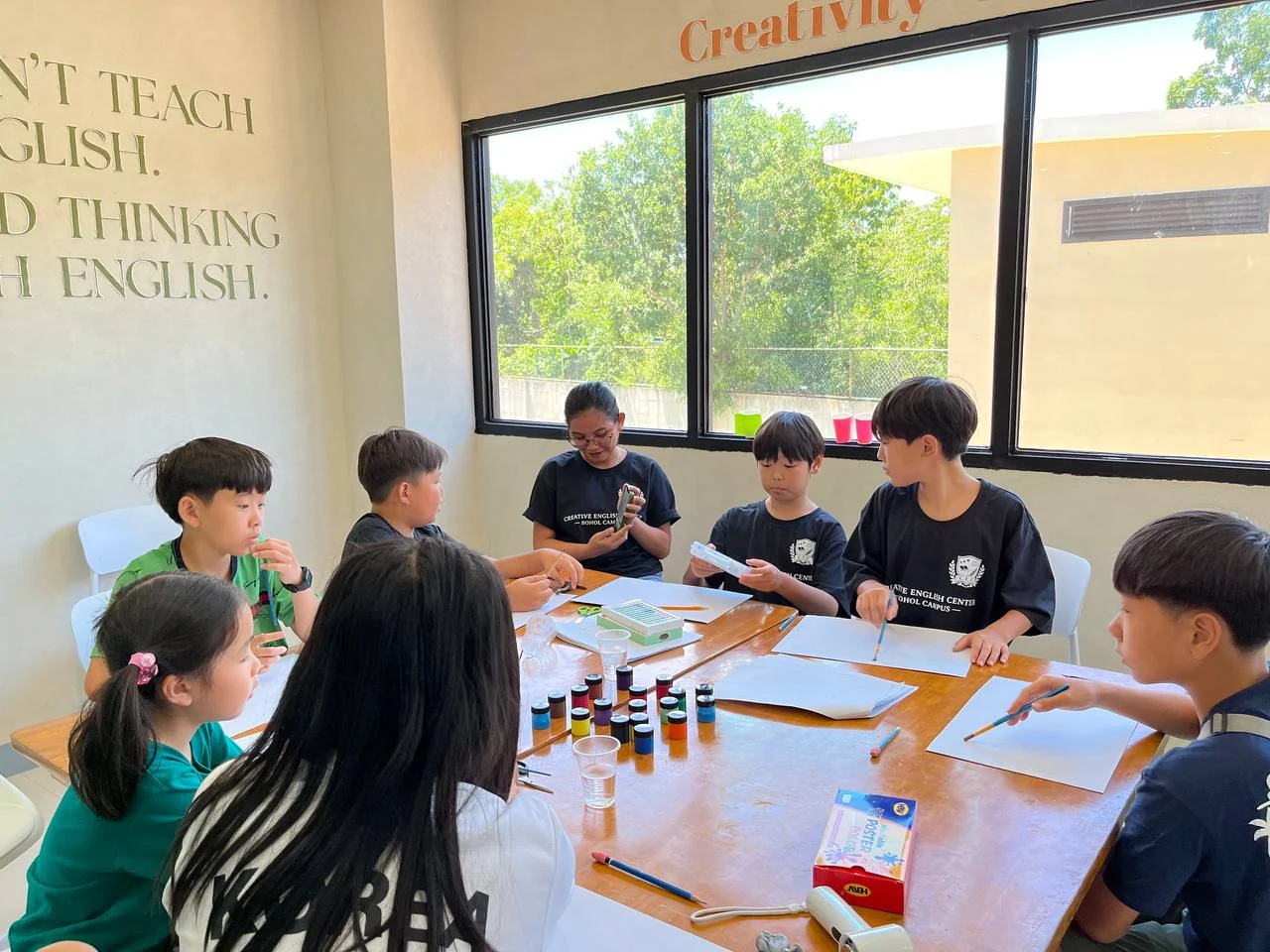
THE CEC THINKING CYCLE
Five stages connecting leaf observation
with expression in English.
Observe the color, shape and texture of fallen leaves. What children notice becomes the starting point for conversation.
“What do you notice?”
Observe · Feel · Notice differences
Wonder why leaves have different shapes or visible veins. Teachers ask questions that invite comparison and possible explanations.
“Why are these leaves different?”
Compare · Ask · Consider reasons
Find words and sentences to describe observations. Support moves from words to sentences and explanations according to each learner’s level.
“This leaf is longer than that one.”
Label · Build sentences · Connect with reading
Draw a leaf, make an observation record and explain it to a friend. Speaking, writing, drawings and artwork support one another.
“Let me show you what I found.”
Draw · Record · Make · Present
Choose an interesting discovery and explain why it matters. Listen to other interpretations while developing a personal point of view.
“I think… because…”
Choose · Give reasons · Listen to other views
REAL CLASSROOM WORK
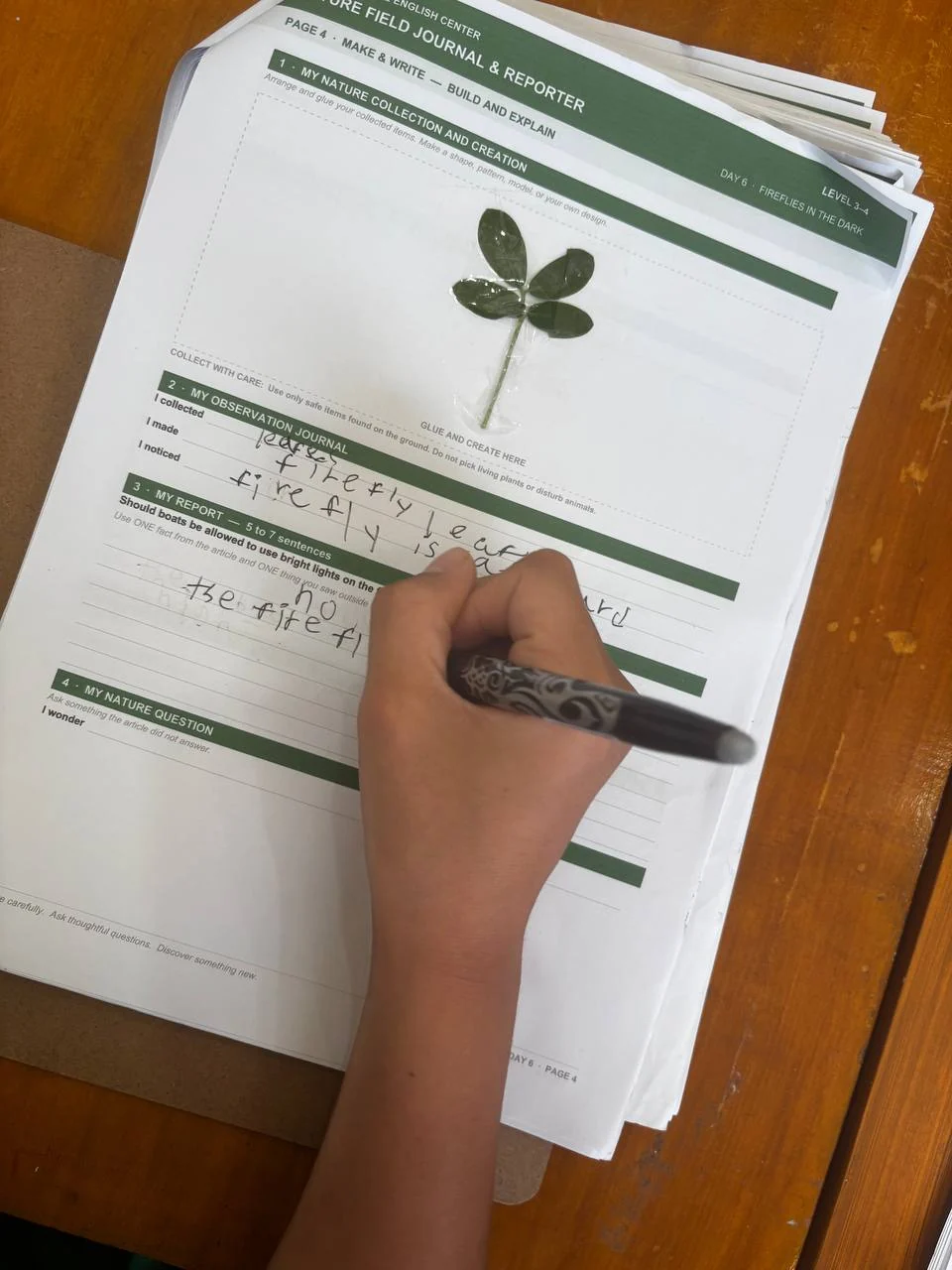
Record observations through words and sentences.
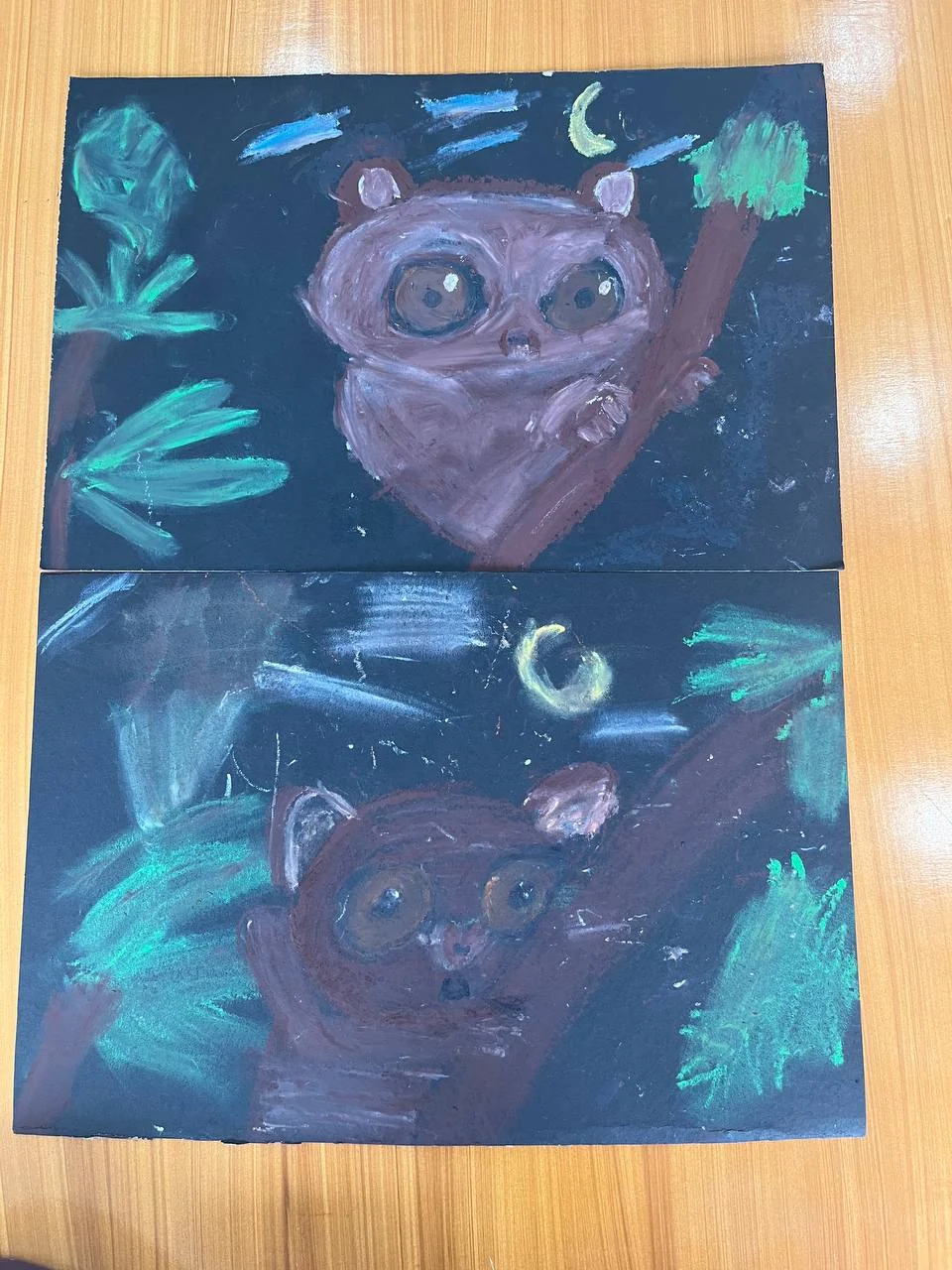
Notice shapes and colors and express them in artwork.
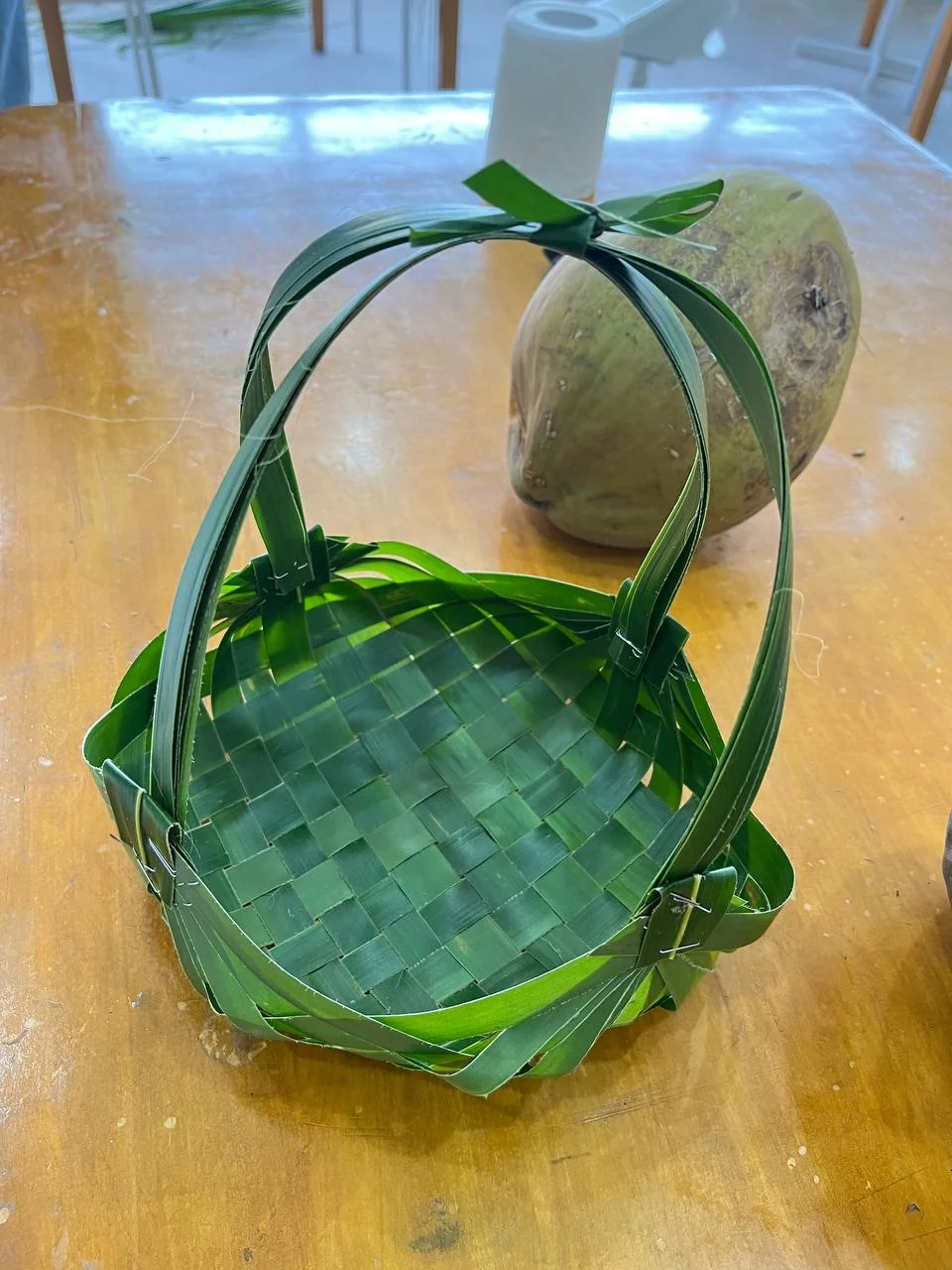
Explore materials, make something and consider how it can be used.
FROM FIRST CONVERSATION TO FEEDBACK
Connect what parents know with what teachers notice in class. Questionnaire responses provide a starting point for planning, refined through observation.
Start a conversationDiscuss age, English experience, dates and what your family hopes to gain.
After consultation, complete the Google Form about interests, learning experience, adjustment and support needs.
We share a parent-informed starting point, questions to explore in class and possible ways to support participation.
Teachers observe understanding and expression, adapting questions, resources, tasks and the level of help.
Spoken ideas, records and work help teachers describe learning and useful next steps.
CEC LEARNER PROFILE
Illustrative structure · No student information
Pre-arrival guidance is based on parent responses and distinguished from direct teacher assessment. It is not a psychological diagnosis, fixed personality label or standardized English test result.
EVIDENCE OF LEARNING
Notice understanding and expression in words, sentences and explanations.
Distinguish independent work from responses supported by prompts, models or sentence frames.
Suggest a topic to read about, an expression to practise or a question to revisit.
Teacher feedback is included for full-day participation and longer. The availability, timing and format of a detailed Growth Report are discussed for the selected program and length of stay. Two-hour participation centres on the scheduled lesson and activity materials.
For longer participation, task difficulty and support are considered when discussing change. Parent responses and teacher observations remain distinct, and short-term English gains are not guaranteed as a numerical result.
Ask about feedback for your stayWHY FAMILIES CHOOSE CEC
From the learning approach to the teachers and support for your child. Answers to help you choose.
Practical questions about joiningCEC connects English reading and conversation with nature inquiry, creative work and sharing ideas. Children take questions from books into direct observation, then use English to describe discoveries and express a point of view.
Consultation and a parent questionnaire help us understand the starting point and consider support in class. PAWI, our Discovery Journal and classroom examples show how these elements connect. Camps vary: compare how time is used, who teaches, what children create and what feedback families receive.
Explore the learning cycleLessons use English for reading, questions, conversation, recording and explanation. In a leaf investigation, a beginner might name colors and shapes; a more confident learner might compare two leaves in a sentence, then explain a view and a reason.
Observation and making give children something to communicate. Teachers support vocabulary, sentence frames and questions. If your priority is a particular reading, writing or speaking goal, we discuss lesson content and available time during consultation.
Preview the learning materialsAfter the first consultation, we send a parent questionnaire through Google Forms. English experience, interests, adjustment to unfamiliar settings and support needs inform the pre-arrival learning profile we share with families.
This is a starting point based on parent responses, then checked and refined through teacher observation. It helps guide questions, resources and language support; it is not a psychological diagnosis or standardized English test result.
From consultation to feedbackOur profiles show English teachers’ education, qualifications and teaching experience. English classes follow CEC’s academic direction and learning resources, with separate teachers for PE and science. A dedicated chef prepares meals.
Assigned teachers and groups are confirmed before registration for the child’s age, English experience and dates. Staff and assignments can change; please ask about availability if you have a preferred teacher.
Meet the teaching teamWe look at spoken ideas, records, creative work and classroom participation together. Feedback focuses on understanding, English expression, what the child did independently or with support, and a useful next step.
Teacher feedback is included for full-day participation and longer. The availability, timing and format of a detailed Growth Report are confirmed for your program and participation length. A two-hour visit does not automatically include the same detailed report as a longer program.
What feedback can showCEC may suit families looking for English learning through reading, questions, nature, making and personal expression. Children do not need to arrive as confident speakers. Families of hesitant learners or beginners can discuss support and a suitable group first.
If your priority is exam preparation, progress through a specific textbook or extended individual English tuition every day, tell us first. We will explain whether the available format and lesson time match that goal.
Consider your family’s goalsBohol’s coast, plants, island environment and local culture provide questions to investigate. Reading PAWI can open a discussion about marine life; observing natural forms can lead to records and artwork. Resources, classroom learning and local experiences connect around these themes.
Environmental activities, football and local encounters are examples of putting care and cooperation into practice. Off-site visits and events vary with weather, operating schedules and the selected program.
Explore learning in BoholChildren can attend classes only and travel from another hotel. DONO accommodation and adult activities are optional. Winter experiences for parents and grandparents are being planned so family members can pursue their own interests and share time together.
Planned options include yoga and movement, art and cultural experiences. Confirmed activities, facilitators, dates and fees are provided before booking. Not all activities run daily or are included in children’s tuition.
Parents & grandparentsYOUR NEXT CHAPTER
Tell us about your child’s age, English experience and your family’s plans.